You ever look at a piece and just stop breathing for a second?
Not because it’s trendy. Not because a celebrity wore it. But because it speaks.
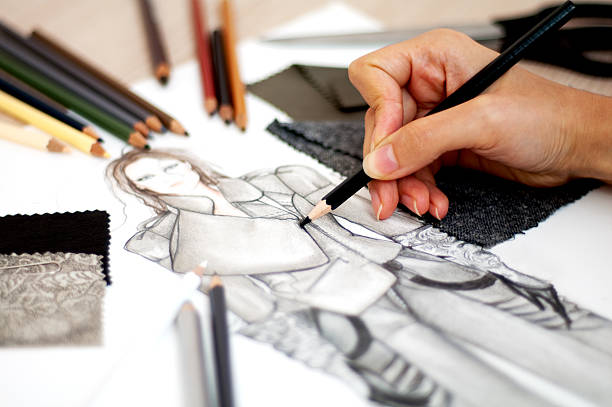
It knows something about you before you do. It tells a story without shouting. It’s soft but sharp. It’s not fashion—it’s a f***ing message. And behind that message? A designer who didn’t follow the rules.
Welcome to Designer Spotlight: the corner of AllureHaven where we don’t just feature designers—we reveal their souls.
🎭
Why “Designer Spotlight” Isn’t Just a Showcase—It’s a Ritual
This isn’t your Pinterest-style round-up of “10 Brands to Watch in 2025.” This is deeper. Darker. More sacred.
Think of it like entering a designer’s mind palace. We’re not just telling you what fabrics they used—we’re unpacking their obsessions, their wounds, their obsessions with structure, their hate-love relationships with perfection. 🎯
Because let’s be real—great fashion doesn’t come from trends. It comes from tension.
Tension between chaos and form. Between past and future. Between what’s worn and what’s felt.
🔥
The Anatomy of Obsession: What We Uncover in Every Feature
When we dive into a designer’s world, we’re not interested in surface bios or Instagram quotes.
We look for:
- 💡 What breaks them – the moment they snapped and chose to rebel.
- 🧵 What binds them – signature materials, obsessions, symbols.
- 🪞 What mirrors their pain – how clothing becomes their language of healing or provocation.
- ✂️ How they construct rebellion – why a certain cut matters, why asymmetry isn’t an accident.
- 🔮 What they see that the world doesn’t yet – their internal forecast, not the industry’s.
So yeah—this is intimate. Almost intrusive. But if you really want to wear a piece like it means something, you gotta know where it came from. Not the factory. The soul.
💥
Who Do We Feature? Not Just Names. Movements.
If you’re thinking we only care about big dogs like Rick Owens or Iris van Herpen—think again.
Sure, we love them. We worship them. But Designer Spotlight is also about the quiet ones. The underdogs. The ones designing from their bedroom studios in Seoul, Cape Town, Tbilisi, or some unknown basement in Antwerp.
We crave stories like:
- A neurodivergent artist stitching garments by feel instead of sketch.
- A former ballet dancer designing clothes for bodies that don’t fit the ideal.
- A Lebanese couture rebel who embeds trauma into silk.
- A Gen Z digital-native who refuses to produce anything physical—only avatar wear.
This isn’t your Fashion Week round-up. This is a psychological excavation.
👁️🗨️
Here’s What a Spotlight Feature Feels Like
Imagine this:
You’re curled up with a glass of wine or oat milk chai. You click on a new Designer Spotlight. The screen fades in. And suddenly you’re:
- Walking through the designer’s childhood home—peeking at the broken ceramic angels they still collect.
- Seeing early sketches torn up in a rage during a breakup.
- Watching them adjust a hemline while whispering that the piece is “a response to shame.”
You’re not just learning. You’re feeling. You’re stepping into the thread between trauma and textile. 🧶
👗
Let’s Talk Aesthetic Archetypes
(Because Every Designer Has One)
We noticed a pattern. Every designer—no matter how big or underground—falls into one (or more) of these energy signatures:
- The Sculptor: obsessed with form, weight, gravity—think Haider Ackermann or The Row.
- The Poet: their garments whisper; fabrics like memory foam for the soul—think Simone Rocha or Cecilie Bahnsen.
- The Rebel Monk: minimalist, but radical—think Yohji Yamamoto or Lemaire.
- The Alchemist: transforms trash into gold, pain into provocation—think Marine Serre or Demna.
- The Oracle: always two seasons ahead and three timelines away—think Iris van Herpen or Nensi Dojaka.
We use these archetypes not to label, but to translate. To help you feel what you’re wearing. You’re not buying a shirt. You’re embodying a narrative.
⚠️
Spotlight = Permission to Obsess
You’re not shallow for caring about clothes.
You’re not “doing too much” for dissecting the curve of a shoulder line or the color of a seam.
Designer Spotlight gives you permission to go full fashion nerd. Obsess. Zoom in. Lose hours down a rabbit hole of symbolism. Quote a designer like they’re Rumi.
That’s what this space is for.
✨
Some Designers We’ve Already Featured (and You Should Be Obsessed With)
- Sindiso Khumalo – weaving African heritage into modern eco-feminism.
- Meryll Rogge – ’70s color with ’90s sass and a whole lot of Belgian melancholy.
- Tolu Coker – blurring the line between fashion, journalism, and activism.
- Peter Do – master of minimal emotion. His clothes feel like clean wounds.
- Paolina Russo – like rave culture met folklore in a dream.
And next up? Oh baby, we’re heading into digital-native design, disability-focused couture, and post-apocalyptic tailoring (yes, that’s a thing).
🧠
Why This Matters More Than You Think
Here’s the uncomfortable truth:
Most people wear clothes designed by someone they’ll never know.
That disconnect? It’s part of the problem. It leads to fast fashion addiction, overconsumption, detachment. But when you know the story, you wear with reverence. You move differently. You choose slower.
Designer Spotlight reconnects you with intention.
It’s like—once you’ve read about a coat being inspired by a designer’s grandfather’s funeral, do you really throw it on like it’s nothing?
Nah. You honor it. You remember it.
🕯️
Final Word: This Is a Devotion, Not a Category
Designer Spotlight is more than a content section. It’s a fashion chapel. And every feature is a ritual offering.
We bow to the brave ones who stitch their shadows into wearable art.
And we invite you to do the same.
Not just to wear.
To feel.
To witness.
To remember that every button, every hem, every line—is someone’s legacy.
So next time someone says, “Why are you so obsessed with fashion?”
Just tell them:
“Because it’s how we speak without making a sound.”